





































The Complete Guide to Commercial Washers & Dryers
Understand commercial washer and dryer types, equipment capacities, installation considerations, and how to compare new, refurbished, and used machines.
Whether you are starting a laundromat, equipping an apartment community, or upgrading an on-premise laundry facility, selecting the right commercial machines means balancing capacity, installation requirements, operating costs, and serviceability. This guide explains the main choices and links to more detailed resources where useful.
Types of Commercial Washers
The right washer depends on your laundry volume, available floor space, utilities, and the people using the equipment.
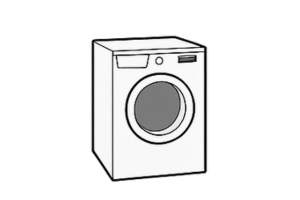
Front-Load Washers
Often suited to busy laundromats and higher-volume facilities. Many models offer efficient water use and larger load options.
- Strength: Capacity and efficiency
- Consider: Purchase and installation cost
- Common uses: Laundromats and hotels
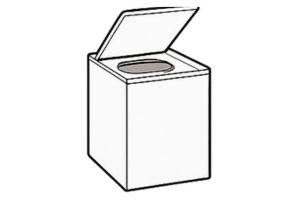
Top-Load Washers
A familiar loading style that can work well in smaller shared laundry rooms and facilities with modest laundry volumes.
- Strength: Simple operation
- Consider: Water use varies by model
- Common uses: Apartments and smaller facilities
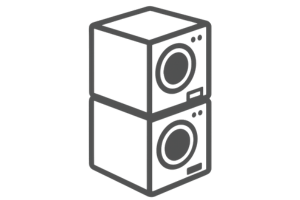
Stacked Units
Vertical configurations help conserve floor space. Washer-dryer stacks and stacked dryers are different equipment types, so check the model specifications.
- Strength: Smaller footprint
- Consider: Service access and configuration
- Common uses: Compact laundry rooms
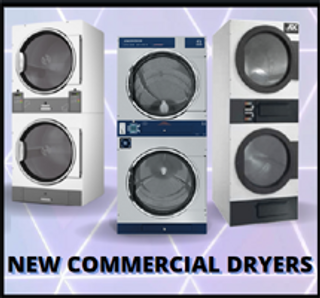
For specific equipment availability, browse brand-new commercial laundry equipment or refurbished commercial laundry equipment.
Need a closer comparison? Read Front-Load vs. Top-Load Washers: Which Works Best for Laundromats? for a more focused discussion.
Commercial Washer Extractors
Washer extractors remove water from laundry during the spin or extraction stage. Effective extraction can reduce the moisture left for dryers to remove, but results depend on the washer's extraction performance, load, and fabric type.
Soft-Mount vs. Hard-Mount Washers

Soft-mount washers incorporate suspension systems that help manage vibration and may offer more installation flexibility, subject to the building and manufacturer's requirements.
Hard-mount washers transfer more extraction forces to their foundation and typically require a suitably engineered concrete base and anchoring.
| Factor | Soft-mount | Hard-mount |
|---|---|---|
| Vibration control | Suspension helps isolate vibration | Foundation and anchoring manage forces |
| Installation | Assess floor loading and manufacturer requirements | Assess concrete foundation and anchoring requirements |
| Initial cost | Varies by model and installation | Varies by model and foundation work |
| Maintenance | Includes suspension components | Includes mounts, anchors, and related components |
| Best choice | Depends on site constraints and equipment specifications | Depends on foundation suitability and equipment specifications |
Have a qualified installer assess floor structure, vibration, and utility requirements before selecting a mount type.
Gas vs. Electric Commercial Dryers
Both types can serve commercial laundry operations. The better option depends on available utilities, energy rates, venting, equipment size, and installation costs.
Gas Dryers
Use gas for heating and electricity for controls and motors. They require a suitable gas supply, proper venting, and compliant installation.
- Compare local gas prices and expected usage
- Check gas-line capacity and ventilation
- Include installation and maintenance costs
Electric Dryers
Use electric heating and require an electrical supply sized for the commercial model. Many commercial units require more than a standard household outlet.
- Confirm voltage, phase, and circuit capacity
- Compare electricity rates and expected usage
- Account for ventilation and installation
For an existing dryer, read when to repair or replace a commercial dryer.
Commercial Laundry Brands: What to Compare
Brand reputation is one consideration, but a specific machine's rated capacity, utility requirements, control system, parts availability, and condition matter more when comparing equipment. The manufacturers below represent brands commonly considered for commercial laundry applications; available models and configurations vary.

Maytag


Huebsch

For a side-by-side overview of six major manufacturers, read Commercial Washing Machine Brands Compared. For more manufacturer-specific explanations, visit our Equipment & Brand Guides. Check each individual product listing for model-specific details rather than assuming all machines from one manufacturer share the same features.
Commercial Washer & Dryer Capacities
Capacity is usually expressed as a rated dry-laundry weight, commonly in pounds. It is not the same as drum volume, and it should not be inferred from the outside dimensions of the machine. Always confirm the manufacturer's rating for the exact model.
| Equipment | How to evaluate capacity | Additional check |
|---|---|---|
| Front-load washer | Match rated load weight and cycle throughput to expected demand | Door clearance, extraction, utilities, and floor requirements |
| Top-load washer | Check rated load weight and anticipated load sizes | Water consumption, access, and controls |
| Stacked washer-dryer | Verify the washer and dryer ratings separately | Height, service clearance, and utility connections |
| Stacked dryers | Verify the rating of each dryer pocket | Venting, heat source, and airflow requirements |
| Single commercial dryer | Balance dryer capacity and cycle time against washer output | Gas or electrical requirements and exhaust design |
For a more detailed explanation of capacity classes, read Commercial Washer Sizes Explained: 10 lb to 120 lb. When comparing listings, record the exact model number, rated load capacity, dimensions, voltage and phase (where applicable), and any required installation clearances. Browse new commercial front-load washers or new commercial top-load washers to compare model-specific information.
New vs. Refurbished vs. Used Laundry Equipment
Each purchasing route has trade-offs. Evaluate the individual machine's age, condition, service history, included work, warranty terms, and support options.
| Option | Advantages | What to verify |
|---|---|---|
| New equipment | Current model selection and applicable manufacturer warranty | Specifications, warranty coverage, delivery, installation |
| Refurbished equipment | Potential lower upfront price and completed reconditioning work | Exactly what was rebuilt or tested; warranty and condition |
| Used equipment | Potentially lowest purchase price | Operating condition, maintenance records, missing parts, any warranty |
For additional context, compare available refurbished laundry equipment with new commercial laundry equipment. Request model-specific details before deciding.
For a practical inspection checklist, read Buying Refurbished Commercial Laundry Equipment: What to Check Before You Buy. For a broader purchasing comparison, read Buy vs. Rent vs. Refurbished Commercial Laundry Equipment. Rental eligibility and terms depend on location and equipment; rental coverage should not be confused with nationwide equipment shipping.
Laundromat Startup Planning & Equipment Requirements
Opening a laundromat requires planning beyond the purchase price of washers and dryers. Location, construction, utilities, and the number and type of machines can substantially affect the initial budget.
Common Startup Expenses
- Commercial property lease, deposits, and renovation
- Commercial washers, dryers, and payment systems
- Water supply, drainage, electrical, gas, and ventilation work
- Permits, licenses, insurance, and professional fees
- Installation, signage, supplies, and working capital
Budget planning: Build a location-specific estimate using equipment quotes, construction and utility assessments, permits, installation, and a working-capital allowance. Published startup-cost figures may not reflect your site or project scope.
Compare refurbished commercial laundry equipment with new options, including delivery, installation, and service considerations.
OPL vs. Coin-Operated Machines
On-Premise Laundry (OPL)
OPL equipment processes laundry for an organization's own operations, such as hotels, hospitals, care facilities, and institutional laundries. These machines are not necessarily coin-operated or compact.
Coin-Operated Laundry Equipment
Coin-operated washers and dryers allow customers or residents to pay per use in laundromats and shared laundry rooms. Some facilities use card or other payment systems instead of coins.
Explore new commercial washers and dryers and confirm the appropriate payment setup for each model.
Commercial Washer & Dryer Maintenance Tips
Routine care can help identify developing problems, reduce avoidable downtime, and keep equipment operating as intended. Always follow the maintenance schedule for the specific model.
Regular Cleaning
Clean washer dispensers, seals, and accessible drum surfaces as directed by the manufacturer. Remove dryer lint after each load or at the interval required by the machine.
Inspect Hoses & Connections
Check accessible water hoses and drainage areas for leaks or wear. Have qualified personnel assess electrical and gas connections when servicing is needed.
Moving Parts & Components
Watch for changes in noise, vibration, or performance. Follow manufacturer instructions for belts, bearings, lubrication points, and other serviceable components.
Preventive Servicing
Plan inspections according to usage, operating conditions, and manufacturer recommendations. Record maintenance and repairs to help diagnose recurring issues.
For specific problems, read why a commercial washer may not start, review commercial dryer replacement considerations, or explore our repair and maintenance guides.
Operating Costs, Reliability & Buying Decisions
Equipment economics depend on real-world operating conditions. Rather than assuming a fixed percentage of water savings or a universal payback period, estimate costs using the details of your facility.
Operating costs
- Water and sewer rates
- Electricity and gas rates
- Machine efficiency and cycle selection
- Maintenance and downtime
Purchase considerations
- Initial price and installation
- Machine condition and warranty
- Parts availability and service support
- Expected laundry volume and capacity
For equipment that is not working as expected, our commercial washer won't start troubleshooting guide explains common startup issues. You can also browse commercial laundry troubleshooting resources and washer and dryer repair guides.
Frequently Asked Questions
What is the difference between soft-mount and hard-mount washers?
Soft-mount washers use suspension to help isolate vibration. Hard-mount washers typically require a suitable engineered foundation and anchoring. Installation suitability depends on the specific model and building.
Which is better: gas or electric commercial dryers?
Neither is universally better. Compare available gas and electrical service, local utility rates, venting, installation requirements, and the model's expected energy consumption.
How much does it cost to start a laundromat?
Costs depend on location, lease terms, building condition, utility upgrades, equipment selection, permits, and working capital. Obtain site-specific contractor and equipment quotes instead of relying on a single industry-wide estimate.
How do I choose a commercial washer for my facility?
Start with peak laundry volume, load sizes, available space, utility capacity, installation constraints, payment requirements (if any), and the service needs of the specific model.
What are commercial laundry machines?
Commercial laundry machines are washers and dryers designed for business, institutional, or shared-use settings. Capacity, construction, features, and duty cycle vary by model and application.
Need Help Choosing Commercial Laundry Equipment?
Compare new and refurbished options or contact our team about equipment availability, specifications, and parts.